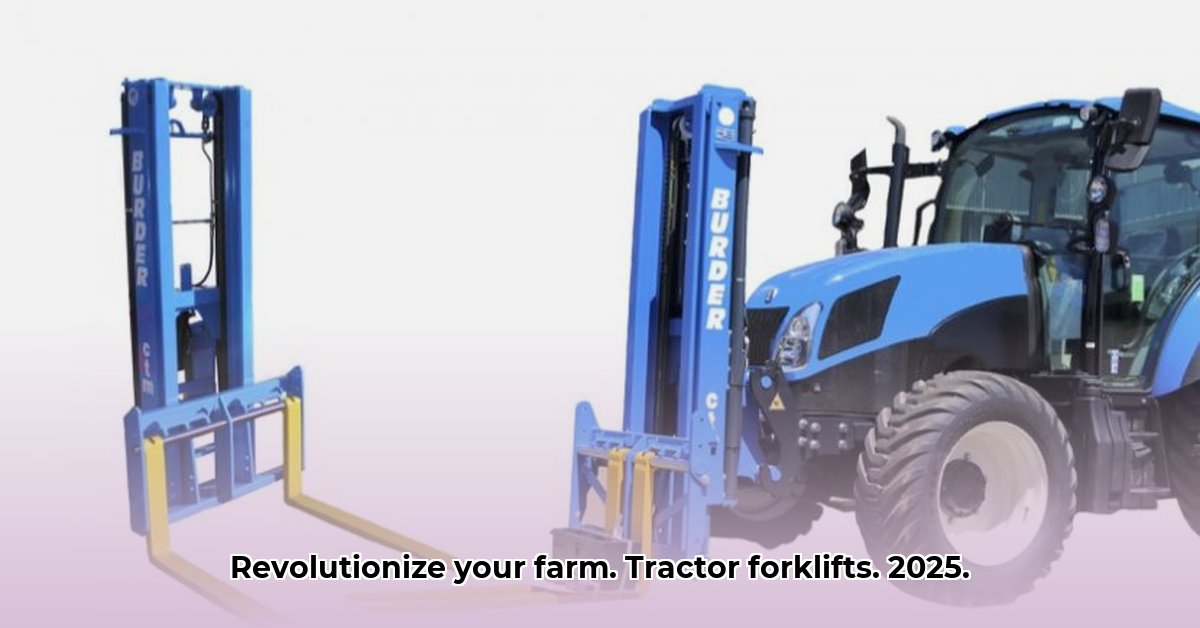
Tired of backbreaking labor moving heavy loads? Tractor forklifts can revolutionize your farm's productivity. This comprehensive guide helps you choose and utilize a tractor forklift safely and efficiently, covering everything from selecting the right model to ensuring its long-term operation. Let's get started! For more information on small tractor loaders, check out this helpful resource: Small Tractor Loaders.
Types of Tractor Forklifts: Finding the Right Fit for Your Farm
Tractor forklifts aren't one-size-fits-all. Understanding the differences between types is crucial for making the right choice.
Telescopic Forklifts
These are ideal for stacking and placing loads in tighter areas. Their extended reach makes them incredibly versatile for various farm jobs. However, they might struggle on uneven terrain.
Articulating Forklifts
Offering exceptional maneuverability, these forklifts shine in confined spaces and navigate uneven terrain with ease. Their compact design is a significant advantage in tight barns or yards. However, they might have a lower lifting capacity compared to other types.
Rough-Terrain Forklifts
Built for rugged environments, these machines excel on uneven ground and challenging landscapes. If your farm has hilly or bumpy terrain, this is the most suitable option. However, they are often less maneuverable in confined spaces than articulated models.
(Image suggestion: A collage showcasing each forklift type in a relevant farm setting.)
Choosing the Right Tractor Forklift: A Step-by-Step Guide
Selecting the perfect forklift depends on various factors. Let's dissect these essential considerations:
1. Assessing Your Lifting Needs (Capacity)
What will you be lifting? Hay bales? Feed sacks? Pallets of supplies? Accurately weighing your typical loads is crucial. Always slightly overestimate your lifting needs to ensure safety and avoid equipment damage. Consider future needs—your farm may expand, requiring a more powerful machine. A common mistake is underestimating the weight of materials; how much weight does the materials you are moving weigh, and are you taking extra weight into account? This can create safety issues and compromise the efficacy of your choice.
2. Budgetary Considerations
New tractor forklifts typically range from $15,000 to $35,000, but the price varies considerably based on features and brand. Used forklifts offer significant cost savings, but a pre-purchase inspection by a qualified mechanic is vital. Remember to factor in financing options; you should consider your current financial profile when weighing these costs. Many dealerships offer plans to make purchasing more manageable.
3. Ensuring Compatibility with Your Tractor
This is critical. Confirm compatibility with your tractor's 3-point hitch system before purchasing. Incompatible equipment creates safety hazards and leads to costly repairs. Always check manufacturer specifications; consult a dealer or equipment specialist if unsure. Ignoring compatibility could lead to catastrophic failure.
4. Focusing on Essential Features
Lift Height: How high do you need to lift? Higher lift capabilities increase versatility; for instance, loading hay into a loft necessitates a greater lift height.
Maneuverability: For tight barns or narrow pathways, maneuverability is paramount. Articulating forklifts excel in confined spaces.
Safety Features: Load stabilizers, backup alarms, and other safety mechanisms are crucial; they prevent tipping and enhance operator awareness. Your safety and the safety of your crew should always be your number one priority.
Operation and Maintenance: A Guide to Safe and Efficient Use
Safe operation and regular maintenance are crucial for longevity and accident prevention.
1. Pre-Operation Checks
Before each use, conduct a thorough inspection. Check fluid levels (hydraulic fluid, engine oil), confirm safety systems (lights, horn, backup alarm), and inspect forks and lifting mechanisms for damage or wear. Regular inspections may reveal smaller problems before they become costly larger ones.
2. Safe Lifting Practices
Never exceed the rated capacity. Ensure loads are stable and evenly distributed before lifting. Lift and lower loads smoothly and slowly, avoiding sudden movements. A common mistake made by newcomers is lifting the loads too quickly.
3. Regular Maintenance
Create a maintenance schedule, including lubrication, fluid changes, and inspections. Consult the owner's manual for specific recommendations. Regular maintenance prevents small problems turning into major issues. Hire a qualified mechanic for routine servicing. Preventative maintenance can drastically reduce unforeseen repair costs.
Safety: Protecting Yourself and Your Investment
Prioritizing safety is non-negotiable.
Operator Training: Proper training is essential. Thoroughly understand the operating manual, load limits, and safe lifting techniques.
Safety Regulations: Adhere strictly to all safety regulations and never compromise on safety. Additional safety equipment (high-visibility vests, safety glasses) enhances protection.
Emergency Procedures: Know what to do in case of malfunctions or accidents. Knowing emergency procedures and acting decisively can be the difference between minimal damage or a major accident.
Cost Considerations: The Total Cost of Ownership
While the initial purchase price is substantial, consider ongoing costs:
Fuel Consumption: Compare gasoline versus diesel; diesel offers better fuel efficiency but higher upfront costs.
Maintenance: Budget for oil changes, filter replacements, and other routine maintenance.
Repairs: Factor in potential repairs; costs vary based on forklift type and usage.
(Table suggestion: A detailed table comparing the costs of different forklift types over a 5-year period, including fuel, maintenance, and potential repairs.)
Conclusion: Investing in Your Farm's Future
Investing in a tractor forklift promises significant efficiency gains, but selecting the right model is paramount for maximizing return on investment. Consider your specific needs, budget, terrain, and consult with experienced professionals for informed decision-making. Remember, prioritizing safety through proper training is a non-negotiable aspect of responsible farm management. Proper investment in training and maintenance maximizes your return on investment.